Made in Texas • Ships Uncompressed • CAL TB117-2013 Compliant
Acoustic Foam Explained (Quickly & Without the BS): What It Does, What It Doesn’t, and What to Buy
Acoustic foam helps reduce echo and room reverb by absorbing mid and high frequencies. It does not “soundproof” a room or stop bass from traveling through walls.
This guide shows exactly what foam is good for, what it won’t fix, and how to choose the right panels for streaming, vocals, podcasting, or a home studio.
How to use this guide
Use this guide to decide whether acoustic foam is right for your space, how much you actually need, and where it will make the biggest difference. Most rooms improve more from correct placement and realistic expectations than from buying more panels.
If you want specific recommendations for your room, try our Acoustic Room Treatment Calculator.
If you’re unsure, start small and adjust based on how the room sounds—not how the walls look.
What acoustic foam actually does
Acoustic foam improves room clarity by reducing sound reflections and reverberation, especially for voice, streaming, and recording environments. It makes your mic sound cleaner and your room feel more controlled—especially for spoken voice and streaming setups. Acoustic foam works best when placed at reflection points rather than randomly covering walls. Acoustic foam primarily absorbs mid and high frequencies. Low frequencies require thicker materials and often dedicated bass traps.
What acoustic foam does NOT do (soundproofing myth)
Foam doesn’t block sound from leaving your room. Soundproofing needs mass + sealing + decoupling (drywall layers, insulation, door seals, etc.). Foam is for sound treatment, not isolation. That doesn’t make foam useless—it just means it solves a different problem than soundproofing.
When acoustic foam is the wrong solution
If your main problem is noise leaking out of a room, loud neighbors, or bass traveling through walls, acoustic foam alone won’t solve it. Those issues require construction-based soundproofing solutions like added mass, sealing gaps, or structural changes. Acoustic foam is most effective when the goal is clarity inside the room—not isolation from the outside.
Choosing foam thickness: 1" vs 2"
If you’re buying foam expecting it to handle low-end/bass problems, you’ll be disappointed—foam thickness and placement matter. Thicker foam doesn’t magically fix bass, but it does absorb a wider range of frequencies more effectively than thin foam. Thicker foam works better because it allows sound waves to penetrate deeper into the material before reflecting back into the room.
1": light treatment; mainly helps with high-frequency reflections
2": the practical baseline for most rooms; noticeably better control for voice/streaming
Foam shapes: wedge vs pyramid vs flat
Shapes mostly change surface area and look. Performance comes from thickness and density more than “pattern.” Choose based on your room’s needs and the aesthetic you want on camera. If two panels are the same thickness and density, their performance will be very similar regardless of shape. Very low-density foam may look similar but absorbs less energy, especially at usable thicknesses.
Bass traps vs wall panels
Corners build up low-frequency energy. If your room sounds "boomy" or muddy, corner bass traps do more than covering random wall squares. This is why bass traps are placed in corners, not flat on walls.
Placement that actually works (quick rules)
For example, a desk streaming setup usually benefits most from treating the wall directly behind the microphone and the wall behind the speaker’s head.
Treat the wall behind your mic and the wall behind you first
Use corners for bass traps
Don’t cover every inch—aim for a controlled room, not a “dead” room
A small amount in the right spots beats a lot in the wrong spots
Avoid placing panels randomly or symmetrically just for looks
Why “uncompressed shipping” matters
Compressed foam can arrive misshapen, creased, damaged, and take time to recover—sometimes unevenly. Uncompressed foam arrives closer to its intended shape and thickness, which makes installations easier and results more consistent. This also protects the internal cell-structure from being damaged during heavy compression or vacuum sealing. Compression doesn’t change what foam is meant to do, but aggressive compression can deform its cell structure and thickness, leading to inconsistent results between panels. Not all compressed foam is permanently damaged, but heavy compression increases the chance of uneven recovery and inconsistent performance.
How many panels do you need? (simple starter ranges)
These ranges are starting points—most rooms benefit more from correct placement than adding extra panels.
Desk streaming/podcasting: 12–24 panels (12"×12")
Small bedroom studio: 24–48 panels
Add bass traps if low-end is an issue
Quick recommendations by goal
These are general starting points. Room size, mic type, and layout can change what works best, but the options below cover most setups effectively.
For streaming & voice clarity
Start with 2″ wedge or 2″ pyramid panels placed at key reflection points around the mic.For aesthetics on camera
Decorative acoustic panels provide sound treatment while keeping a clean, intentional look on screen.For low-end control
Corner bass traps are the most effective way to reduce boominess and muddy bass buildup.
If you’re not sure which option fits your space, the questions below address the most common setup and placement concerns.
Common Questions About Acoustic Foam
Does acoustic foam soundproof a room?
No. Acoustic foam does not stop sound from leaving a room or block outside noise from coming in. Soundproofing requires mass, sealing gaps, and sometimes structural changes. Acoustic foam is used for sound treatment, meaning it improves clarity inside the room by reducing echo and reflections.
Can acoustic foam help with echo in empty rooms?
Yes. Empty rooms with hard surfaces tend to create strong reflections. Adding acoustic foam helps reduce echo and makes the space sound more controlled and usable.
Will acoustic foam fix bass problems?
Not significantly on its own. Bass frequencies require thicker materials and strategic placement. Corner bass traps are far more effective for low-end control than thin wall panels placed flat on walls.
Choosing the right foam
Will 1-inch foam work?
1-inch foam can help reduce high-frequency reflections, but it has limited impact overall. For most voice, streaming, and home studio setups, 2-inch foam is the practical baseline. Thicker foam absorbs a wider range of frequencies and produces more noticeable results.
Is thicker foam always better?
Not always. Thicker foam absorbs more sound, but placement and room needs matter more than simply choosing the thickest option available.
Is pyramid foam better than wedge foam?
Not inherently. Pyramid and wedge foam perform very similarly when they are the same thickness and density. The choice often comes down to appearance and how you want the panels to look on camera rather than a major performance difference.
Why is cheap Amazon foam so thin?
Many low-cost foam panels are made thin to reduce material and shipping costs. Thin foam can look effective visually but absorbs less sound, especially at usable frequencies. This is why some rooms appear “treated” without sounding much better.
Placement & setup
Where should I place panels for a microphone?
Start by treating the wall directly behind the microphone and the wall behind the speaker’s head. These are common reflection points that affect vocal clarity. From there, add panels gradually based on how the room sounds.
How many panels do I need for streaming?
Most desk-based streaming or podcast setups benefit from 12–24 panels (12″ × 12″) placed strategically. Small bedroom studios often use 24–48 panels, plus bass traps if low-end issues are present. Correct placement usually matters more than adding extra panels.
Should I treat one wall or multiple walls first?
It’s usually better to treat a few key reflection points on multiple surfaces than to fully cover one wall. Starting with the walls behind the mic and behind the speaker gives the biggest improvement for most setups.
Can I put acoustic foam on the ceiling?
Yes. Ceiling placement can be effective when reflections are coming from above, especially in rooms with hard floors or low ceilings. Ceiling treatment is often used to reduce overhead reflections.
Do I need foam on every wall?
No. Treating every wall is rarely necessary and can make a room sound unnaturally dull. Strategic placement at reflection points is usually more effective than full coverage.
Can I overuse acoustic foam?
Yes. Too much foam can make a room sound “dead” or lifeless. The goal is balance—reducing problematic reflections without removing all natural room character.
Decorative panels & aesthetics
Do decorative panels actually work, or are they just for looks?
Decorative panels can work effectively when proper acoustic foam is behind the cover. The visual layer doesn’t absorb sound on its own, but paired with quality foam it can provide both function and aesthetics.
Will acoustic foam affect how my room looks on camera?
Yes—in many cases it improves how a space looks on camera by reducing visual clutter and harsh reflections. Decorative panels are popular with streamers because they provide sound treatment without the traditional “foam wall” look.
Durability, safety, and shipping
Does compressed foam lose performance?
Compression doesn’t change what foam is designed to do, but aggressive compression can deform its cell structure and thickness. This can lead to uneven recovery and inconsistent performance between panels. Shipping foam uncompressed reduces these risks and results in more consistent installs.
Does acoustic foam wear out over time?
Quality acoustic foam can last many years in normal indoor environments. Exposure to excessive heat, UV light, or high humidity can shorten its lifespan, but properly made foam used indoors is generally a long-term solution.
Is acoustic foam safe to use indoors?
Acoustic foam designed for indoor use is safe when used as intended. It should be kept away from open flames and high-heat sources, and installed according to basic safety guidelines. Fire ratings may matter in certain commercial spaces.
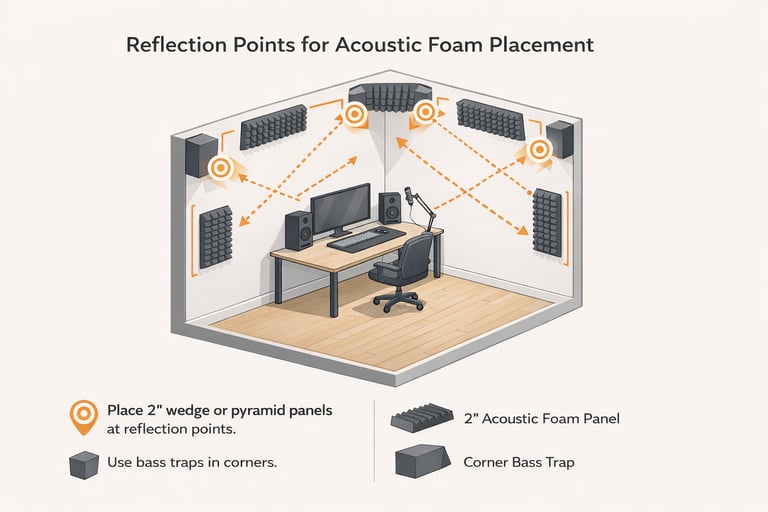
These are common reflection areas to think about — not exact placement rules.
Ready to treat your room?
If acoustic foam makes sense for your space, start simple and build from there. Most rooms improve more from correct placement and realistic expectations than from covering every wall.
If you already know what you need, you can start here:
Shop 2″ Acoustic Panels – a solid baseline for streaming, voice, and home studios
Shop Bass Traps – best for controlling low-end buildup and boominess
Shop Decorative Panels – sound treatment that looks intentional on camera
Want a clearer starting point for your room?
Every room behaves a little differently. Instead of guessing how many panels you need, use our Acoustic Room Treatment Calculator to get a simple recommendation based on your room size and setup.
The calculator gives you a practical starting range and suggested panel types—so you can treat the most important areas first and expand if needed.
Sound Trap Acoustics
Premium acoustic foam panels made in the USA — shipped uncompressed for consistent quality and performance.
Support
Contact US
contactus@soundtrapacoustics.com
© 2025. All rights reserved.